Community Financial Support: What Families Need to Know
TL;DR:
- Community financial support provides affordable credit through local institutions like CDFIs, credit unions, and lending circles. These systems build trust, mentorship, and collective accountability, offering accessible and flexible funding options for underserved families.
Community financial support is defined as a localized, relationship-driven system that provides affordable credit and financial resources to individuals and groups often excluded by mainstream banking. These systems include credit unions, CDFIs, and informal lending circles designed specifically for low-income and minority communities. Unlike traditional banks, they prioritize social impact alongside financial access. For families working to build stability, understanding these options is the first step toward real financial inclusion.
What is community financial support and how does it work?
Community financial support refers to localized, relationship-oriented initiatives that provide affordable credit and capital to individuals and small businesses often excluded from mainstream finance. The recognized industry term for this broader category is “social finance” or “community development finance.” Both terms describe the same core mission: filling the gaps that commercial banks leave behind.

The most well-known structures in this space include Community Development Financial Institutions (CDFIs), credit unions, microfinance organizations, and informal lending circles such as ROSCAs (Rotating Savings and Credit Associations). Each operates differently, but all share a common principle. They put people before profit.
Social finance prioritizes lending with social impact over financial return and fills gaps where commercial banks consider projects too risky. This matters because many families and small business owners have viable needs but lack the credit history or collateral that traditional lenders require. Community finance steps in precisely where the mainstream system steps out.
Pro Tip: If you are new to community finance, start by searching for a CDFI or credit union in your city. These institutions are federally recognized and regulated, which means they carry real accountability alongside their community mission.
What types of community financial support are available?
The types of financial support available through community systems vary widely, but most fall into a few clear categories.
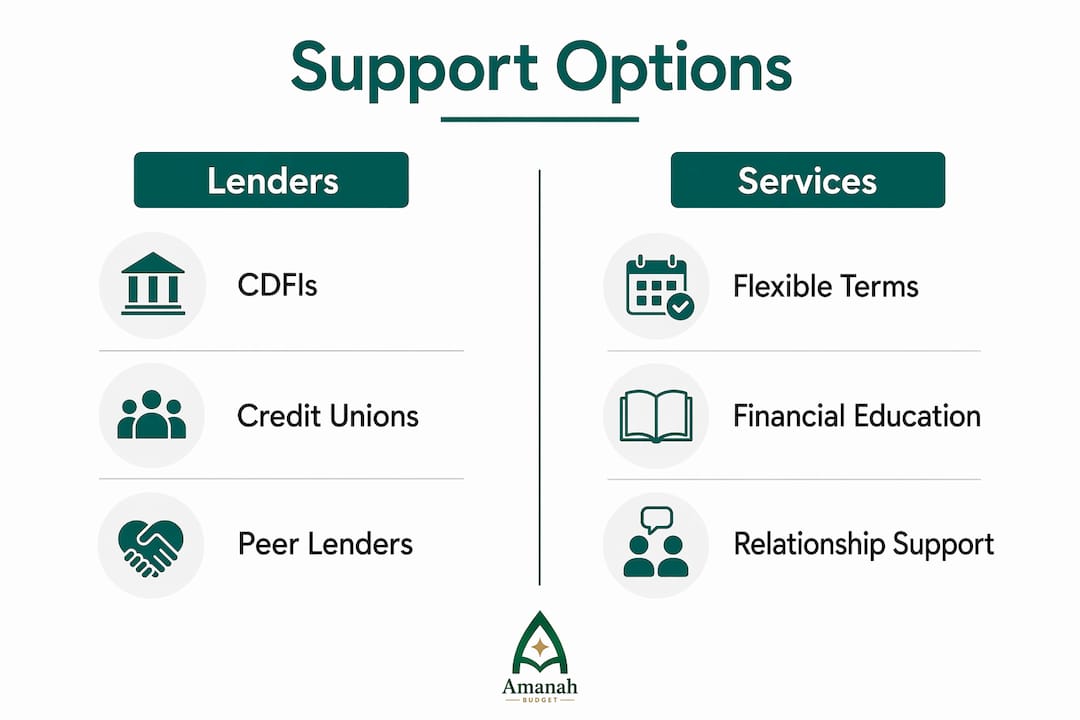
- CDFIs (Community Development Financial Institutions): These are certified lenders that direct capital to underserved communities to create jobs, improve living conditions, and reduce poverty. They offer loans, investments, and financial services to people who cannot access conventional credit.
- Credit unions: Member-owned cooperatives that offer savings accounts, loans, and financial education at lower rates than commercial banks. Membership is often tied to geography, employer, or community group.
- Microfinance organizations: These provide very small loans, often called microloans, to individuals starting businesses or managing short-term cash needs. They are especially common in immigrant and low-income communities.
- Informal lending circles (ROSCAs): Community financial systems operate on high-trust models where social standing and consistent participation matter more than traditional credit scores. ROSCAs pool regular contributions from members and rotate the full amount to one member at a time.
- Social loans and bridge financing: Social finance products like bridge loans help groups start projects that require matched funding or are waiting on retrospective government grants.
One feature that sets community funding options apart from bank loans is flexibility. Many community lenders offer repayment holidays, mentorship, and financial education as part of the package. This is not charity. It is a model built on the understanding that people succeed when they have both capital and knowledge.
Pro Tip: Ask any community lender about their financial education offerings before you sign. Many CDFIs and credit unions include free workshops, one-on-one counseling, and business planning support as part of their loan programs.
Who qualifies for community financial support?
Eligibility for community financial support depends on the program type, but the barriers are generally much lower than traditional bank requirements. Most programs are designed to be accessible, not exclusive.
For formal programs like CDFI loans or community grants, common requirements include:
- Proof of residency or local ties: Most programs serve a defined geographic area. You will typically need a utility bill, lease agreement, or government-issued ID showing your address.
- Operational history (for organizations): Community funding programs often require applicants to demonstrate a minimum period of operation. For example, NSW’s Community Building Partnership offers grants from $10,000 to $100,000 with documentation requirements including legal registration and insurance.
- Proof of financial need: This can include bank statements, income verification, or a written explanation of your situation. Programs vary in how formally they assess this.
- Legal registration (for groups and nonprofits): Organizations applying for grants or social loans typically need to show they are legally registered entities.
For individuals accessing local financial aid through community centers or government programs, the requirements are often lighter. Many programs maintain low entry requirements while requesting basic documentation for specific types of assistance. A phone call to your local library or community center can clarify exactly what you need before you apply.
Pro Tip: Gather your key documents before you start any application. A folder with your ID, proof of address, recent bank statements, and a one-page summary of your financial situation will speed up almost every community finance application.
What benefits does community financial support offer beyond funding?
The financial benefits of community support are real, but the social benefits are what make these systems genuinely different from a bank loan.
Community financial systems generate social capital, including trust, knowledge sharing, and collective safety nets that improve well-being and resilience. Social capital is the practical value of your relationships and reputation within a community. It opens doors that money alone cannot.
- Financial education and mentorship: Many community lenders pair their loans with workshops on budgeting, credit building, and business planning. This knowledge compounds over time.
- Collective accountability: In lending circles and cooperative models, members hold each other accountable. This builds discipline and trust simultaneously.
- Support during hardship: Community networks often provide informal support during personal crises, including referrals to food assistance, housing programs, and emergency funds.
- Flexible repayment terms: Community lenders commonly offer repayment holidays of up to 12 months to support projects reaching sustainability. This flexibility is rare in mainstream loans and helps families manage cash flow during difficult periods.
“Social finance fills critical gaps by lending with a heart, supporting projects that traditional banks consider too risky due to lack of collateral or profit focus. It is the lifeblood of grassroots communities.”
The combination of affordable capital, flexible terms, and relationship-based accountability creates something a bank product simply cannot replicate. Families who engage with community financial systems often report stronger financial habits and a greater sense of belonging, not just a loan repaid.
For families working on financial transparency and trust, community finance models offer a real-world example of how shared accountability strengthens both relationships and finances.
How to find community financial support in your area
Finding local financial aid starts with knowing where to look. The good news is that most entry points are free, accessible, and require no formal referral.
- Local government websites: Search your city or county website for “financial assistance programs” or “community grants for individuals.” Many municipalities maintain directories of approved programs.
- Public libraries: Librarians are underutilized resources. Many libraries host financial counselors, maintain resource boards, and can connect you directly to local programs.
- Community centers and faith organizations: These are often the first to know about new funding rounds, emergency assistance, and informal lending networks in your neighborhood.
- Online platforms and social groups: Starting with small community contributions helps build trust and visibility, facilitating ongoing access to informal financial support. Joining a local Facebook group, neighborhood app, or community forum can surface resources that never appear in official directories.
The table below shows common access points and what each typically offers:
| Access Point | What You Can Find |
|---|---|
| City or county government website | Grant programs, emergency funds, housing assistance |
| Public library | Financial counseling, resource directories, workshops |
| Community center | Informal lending circles, referrals, emergency aid |
| Faith-based organizations | Interest-free loans, zakat funds, community grants |
| CDFI locator (online search) | Certified community lenders, microloans, business support |
When you are ready to explore your options more formally, tools like the financial opportunity calculator from Accelerated Life Solutions can help you compare funding scenarios before committing to a specific path. Understanding the numbers upfront saves time and prevents surprises later.
Why community finance deserves more attention than it gets
Community finance has existed for centuries. ROSCAs, credit unions, and informal lending networks predate modern banking. What has changed is the scale of the gap they are now asked to fill.
Mainstream banks have pulled back from low-income neighborhoods and small-dollar lending over the past two decades. CDFIs and credit unions have stepped into that space, but awareness remains low. Most families who could benefit from these programs never apply because they do not know the programs exist.
The matched funding challenge is real and worth naming directly. Matched funding requirements often challenge community groups needing upfront capital before grants are released. Social loans and bridge financing exist specifically to solve this problem, but families need to know to ask for them.
The deeper lesson I have taken from watching community finance work in practice is this: trust is the actual currency. A family that builds relationships within a lending circle or CDFI network gains something a credit score cannot measure. They gain access to people who will vouch for them, advise them, and support them when things go sideways. That is not a soft benefit. It is a structural advantage.
For Muslim families in particular, the values embedded in community finance, including shared risk, collective accountability, and interest-free lending models, align closely with Islamic financial principles. Seeking out these structures is not just financially wise. It reflects a deeper commitment to how we believe wealth should move through a community.
— Imran
Amanahfund and your path to financial well-being
Amanahfund is built for Muslim families who want their financial tools to reflect their values. Whether you are tracking halal spending, calculating zakat, or saving for Hajj and Umrah, Amanahfund brings Islamic financial principles into your daily budgeting practice.

Community financial support and halal-first budgeting work best together. Knowing where your money comes from and where it goes is the foundation of financial stability. Amanahfund helps you build that foundation with family budgeting tools designed around your goals and your deen. Explore everything Amanahfund offers at amanahfund.com and take the next step toward financial well-being grounded in trust and purpose.
Key Takeaways
Community financial support is most effective when families combine affordable local capital with the social accountability and financial education that community lenders provide alongside funding.
| Point | Details |
|---|---|
| Core definition | Community financial support provides affordable credit through CDFIs, credit unions, and lending circles to underserved families. |
| Social capital matters | These systems build trust, mentorship, and collective accountability beyond the monetary value of any single loan. |
| Eligibility is accessible | Most programs require basic documentation like proof of residency and financial need, not a strong credit score. |
| Flexible terms exist | Repayment holidays of up to 12 months are available through community lenders, a feature rare in mainstream banking. |
| Start locally | Libraries, community centers, and local government websites are the fastest entry points to finding financial assistance programs near you. |
FAQ
What is community financial support?
Community financial support refers to localized systems, including CDFIs, credit unions, and informal lending circles, that provide affordable credit and financial resources to individuals excluded from mainstream banking.
How do I qualify for community financial support?
Most programs require proof of residency, basic financial documentation, and in some cases legal registration for organizations. Barriers are generally much lower than traditional bank loan requirements.
What is the difference between a CDFI and a credit union?
A CDFI is a certified lender focused on underserved communities, often offering loans and grants. A credit union is a member-owned cooperative offering savings and loans at lower rates to its members.
Can I access community financial support without a good credit score?
Yes. Community financial systems often use trust-based and relationship-driven models where social standing and consistent participation carry more weight than a traditional credit score.
What are community grants for individuals?
Community grants for individuals are non-repayable funds offered by government bodies, nonprofits, or community organizations to support specific needs such as housing, education, or emergency expenses.
Recommended
- Examples of Family Financial Transparency That Build Trust — Amanah Budget Blog
- Family Financial Milestones: Examples and Goals for 2026 — Amanah Budget Blog
- Common Family Financial Conflicts and How to Resolve Them — Amanah Budget Blog
- Common Family Financial Conflicts and How to Resolve Them — Amanah Budget Blog
Ready to manage your amanah?
Track halal spending, calculate zakat, save for Hajj — all in one app. Free forever.
Create Free Account